Reconstructing fractured narratives

This is the fifth and final essay in a series of five on the topic of systemic sensemaking. Concepts are developed sequentially throughout, and as such, I recommend reading the essays in order. Navigate to: Part 1; Part 2; Part 3; Part 4.
Last year, I sat in a small seaside cottage near Middlesbrough on a chilly autumn evening. I was visiting a good friend called Linda Grandville, who I had met through an online journaling community I'd been running. Her cosy home was filled with books, self-made artwork, and mementos from a life well lived.
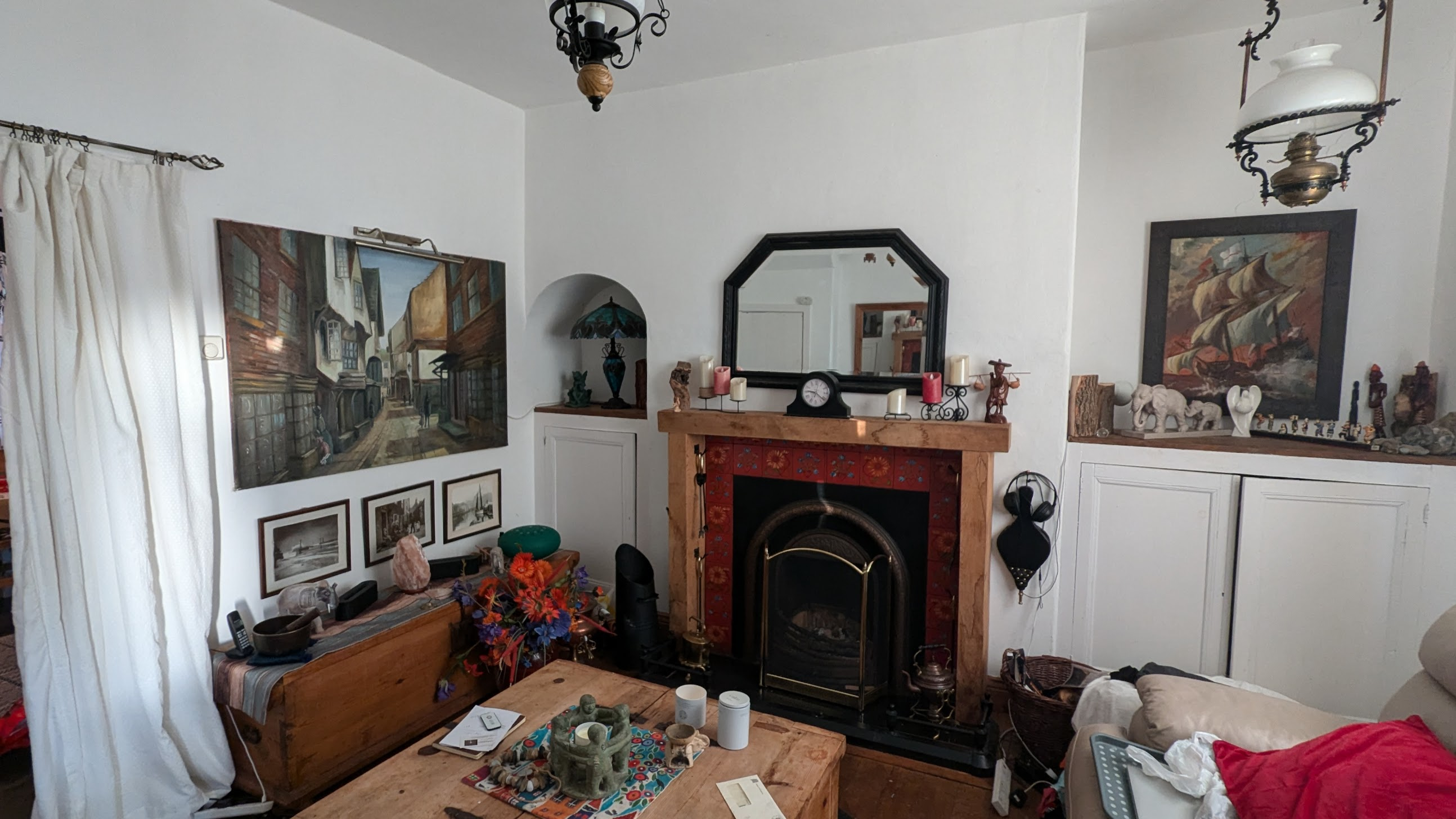
Despite never having much money, Linda's life defies the narratives we're taught define success. Ostracised at a young age by family and community for being an unemployed single mother, she dedicated her life to serving others. She has worked with the homeless, taught youth offenders, and led meditation circles with asylum seekers. To those unaware of her story, her life might look like poverty on paper, but it in fact contains an incredible depth and richness.
As she showed me around Yorkshire, she told me remarkable stories of the various adventures she embarked on throughout her life. At twenty-six, she courageously embarked to Australia on a government £10 emigration passage to start a life anew. She backpacked through Pakistan when few women (or men) would have dared. And even later in life, she continued to expand her worldview by living with locals in South African villages and the Palestinian territories. I highly encourage you to read about her stories told in her own words in her memoir, Dark Holy Ground.
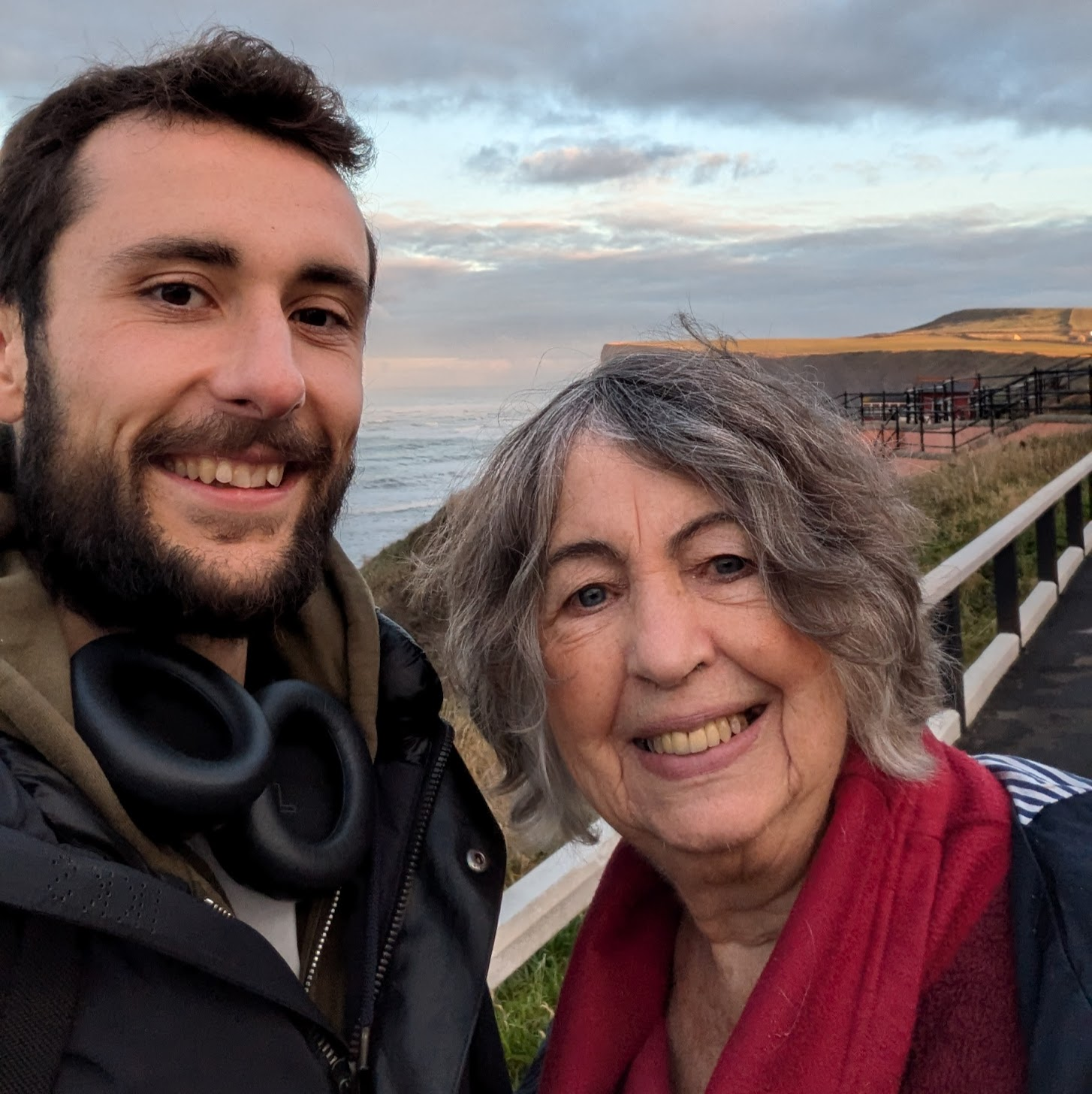
On my return journey from meeting Linda, I found myself asking the question: why is it that a life like Linda's considered marginal, even failed, by conventional metrics? I reflected on my own upbringing and recalled how the notion of 'community service' was regarded as a punishment, while academic and financial success were regarded as the north star of success. So why is it that our systems push us toward accumulation while disincentiving service?
It feels more and more true to me that the modern world is one founded on an outdated story of success – one that places wealth, status, productivity, and achievement centre stage. However, our souls hunger for something else entirely, namely: belonging, purpose, contribution, and connection. It seems the emptiness that haunts modern existence is a byproduct of the narratives we've grown up with – narratives that fail to understand and incentive what genuinely nourishes the soul.
How we arrived at narrative breakdown
To understand our current predicament, let's recall the three fundamental forces from the first essay: technological capability, resource availability, and collective meaning-making. These forces have always shaped one another, but modernity has fundamentally altered their relationship.
Before critiquing the modern era, it's important that we recognise its gifts: the scientific method for unlocking nature's patterns, enlightenment ideals for challenging arbitrary authority, and industrial innovation for generating a surplus of resources. We very much stand on the shoulders of giants, yet the shadow cast by modernity's success stretches long.
Scientific materialism disenchanted the world, fundamentally altering our relationship with the natural world. Nature was no longer seen as a living extension of ourselves. Instead, it became inert matter to be extracted and exploited.
Reductionism abstracted humans from the cycles that govern life. By breaking everything into smaller pieces, we lost sight of patterns that only emerge when we zoom out and view life from a macro-perspective.
Rationalism elevated one form of knowing above all others: propositional knowledge in the form of facts, information, and what we can measure/verify. John Vervaeke identifies this as a core driver of what he calls 'the meaning crisis'. Within his framework he describes the four fundamental ways humans can know reality.
Propositional knowing is knowing that (through facts and information).
Procedural knowing is knowing how (through embodied skills and practical wisdom).
Perspectival knowing is knowing from (through the capacity to frame and reframe experience).
Participatory knowing is knowing with (through transformative engagement where knower and known merge and affect one another).
Modernity systematised the first two while dismissing the others as subjective, illusory, or mystical thinking. We became brilliant at accumulating information while losing wisdom, all the while disconnecting ourselves from practices that cultivate meaning through perspective-taking and direct participation.
Postmodernity arose as corrective philosophy. It rightly challenged modern hubris, questioned the notion of 'objective truth', and shone a light on how power dynamics shape what people consider as 'knowledge'. The culture wars explored in the third essay, stem partly from postmodern sensibilities (albeit in their infancy). However, such an ideology faces its own challenges. If all knowledge is constructed, all narratives equally valid (or suspect), then a shared meaning becomes increasingly difficult to establish.
It is for this reason that a deconstruction of shared (religious) narratives leaves us adrift. When each story is merely constructed, we lose capacity for collective direction. Charles Taylor describes this as 'the malaise of modernity', where people are granted the freedom of choice, yet stripped of the mental frameworks to choose wisely. This has led to a gradual loss of meaning, moral confusion, alienation, and a sense of emptiness despite increased individual freedom.
What was lost in the fracture
Whether you realise it or not, we have been living through the peak of postmodern narrative breakdown, and the structures and systems we have created reflect this. To better understand this, it is helpful to understand the distinction between primary satisfiers and secondary satisfiers – a concept discussed in depth by Francis Weller.
Primary satisfiers are things that deeply nourish a human being. This may include meaningful ritual/ceremony to demarcate key milestones, loving and supportive relationships with others, a personal connection with the natural world, and the opportunity to creatively express one's self. This is the realm of deep inner work, authentic emotional expression (beyond societal masks), and a sense of purpose beyond self.

By contrast, Secondary satisfiers are superficial in nature. Ritual and ceremonies are misunderstood or dismissed. Relationships with others are calculated or transactional. Digital connections take precedence over a connection to the natural world. Consumption replaces creativity and one's energy is channeled toward material accumulation, attaining status, and achieving arbitrary metrics. Entertainment replaces genuine play, distraction dominates depth, and productivity is prioritised over meaning.
We've built entire economic systems around secondary satisfiers precisely because they can be commodified, sold, and endlessly replaced. Primary satisfiers require consensual participation — if you try to purchase genuine connection it will instantly become transactional. Likewise, if you 'pay-to-win' in a video game, the victory will feel hollow. This explains why the hedonic treadmill discussed in the last essay always leaves people craving more.
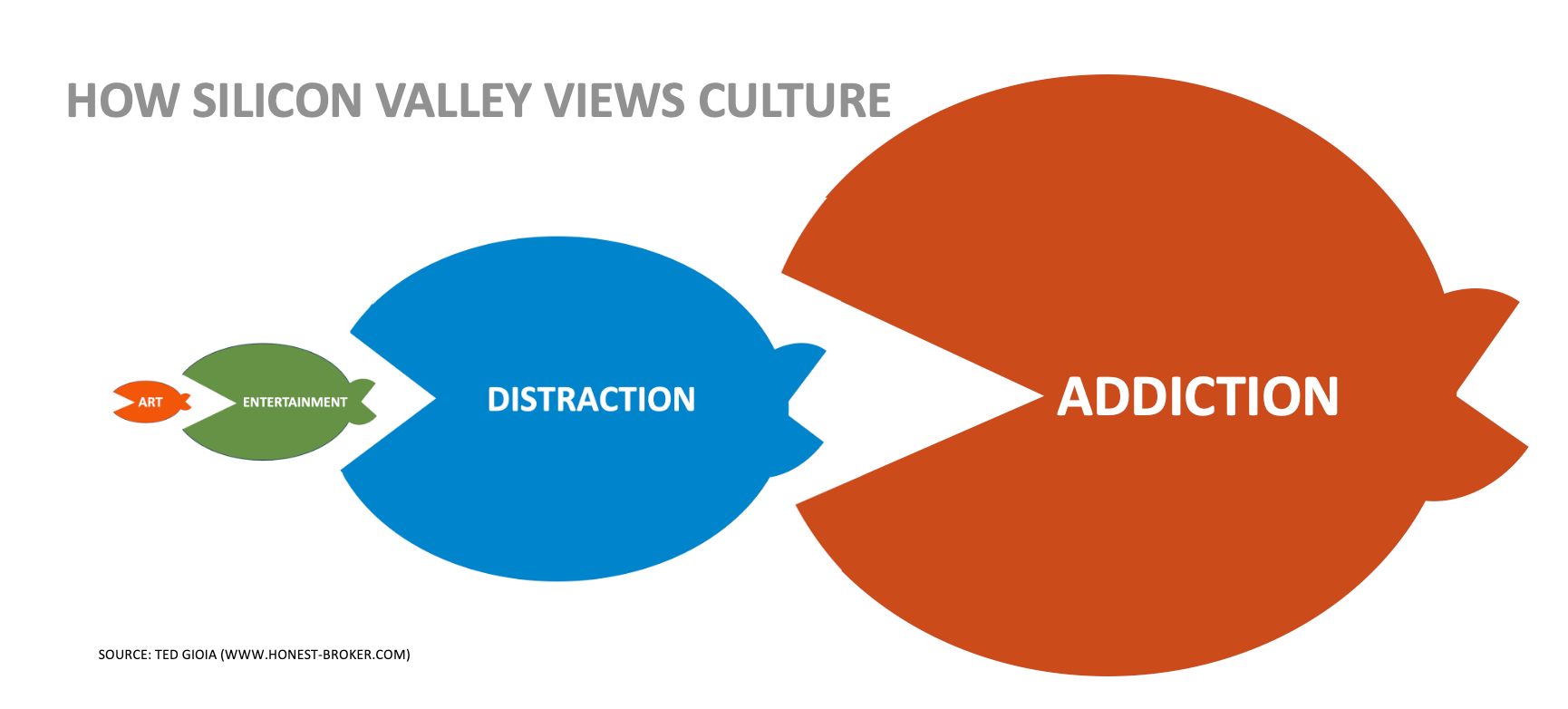
It is becoming clearer by the day that the attention economy profits by keeping people trapped in such cycles. As emotionally charged opinions and AI-generated content saturate the information landscape, the flood of synthetic text and images threaten both our capacity to discern truth from falsehood and signal from noise.
We have built and agreed to participate in systems that generate and perpetuate existential homelessness. Particularly in 'developed' countries, the structures that once wove individuals into larger wholes have unraveled. Extended families have fragmented into nuclear units, then into individuals living alone, interfacing with reality through their devices.
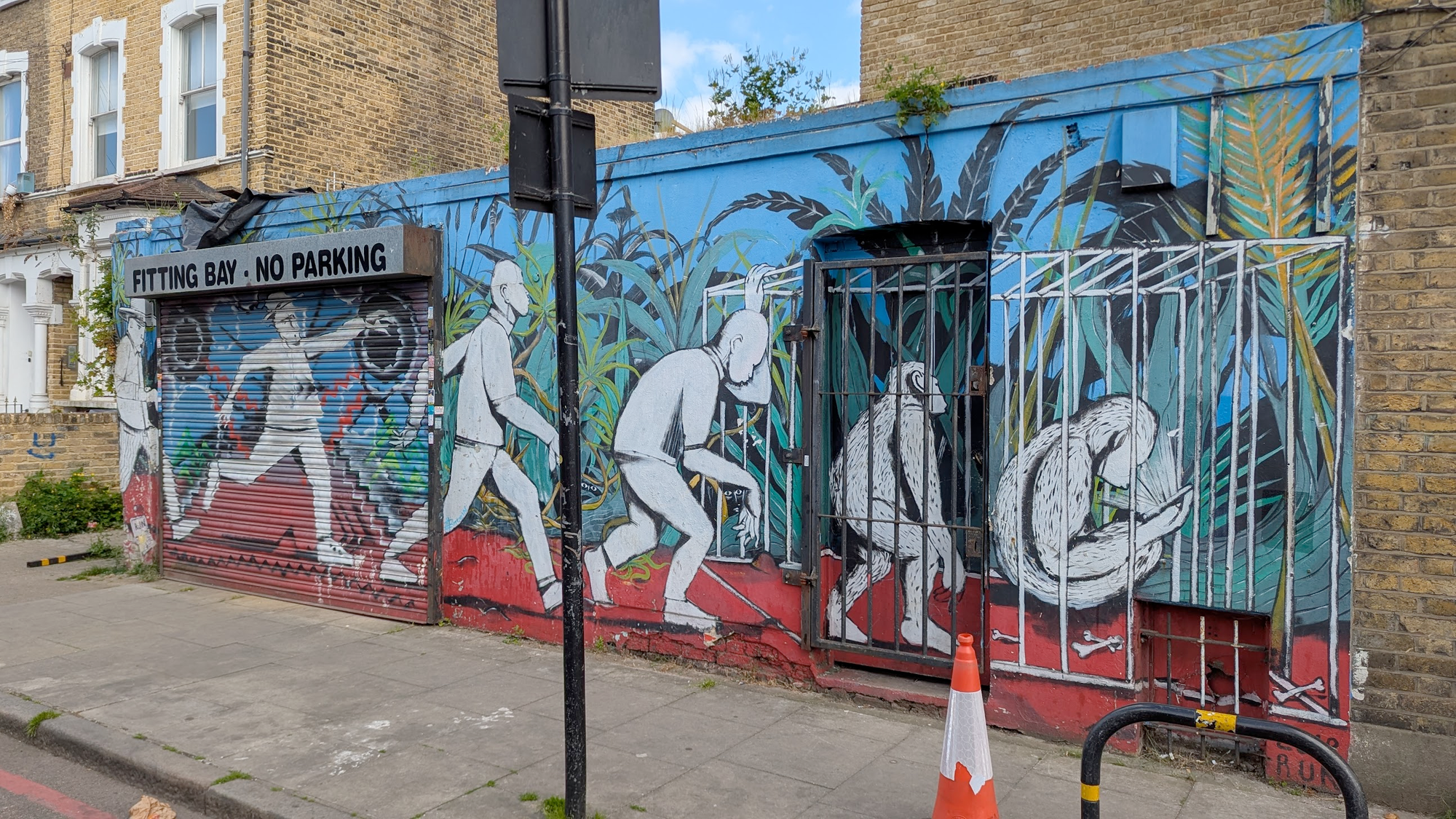
Tragically, we have normalised a life lived disconnected from the natural cycles. Climate controlled homes, artificial lighting, and global supply chains mean that we can live in exactly the same way all year around. There is no longer a need to respect and adhere to the seasonal rhythms. Similarly, globalisation has replaced our cultural rituals with watered down, commercialised celebrations for many.
(Am I the only one wondering why there's always a reason to spend more money waiting around the corner: Christmas, Valentines day, Father's day, Mother's day, Singles day...?)
This structural disconnect from the deeper essence of life could be viewed as a form of amnesia. A forgetting as to the true nature of things. Robin Wall Kimmerer writes of the grammar of animacy – how indigenous languages recognise existence as a verb rather than noun. As such, the world is experienced as alive and relational rather than dead and mechanical.
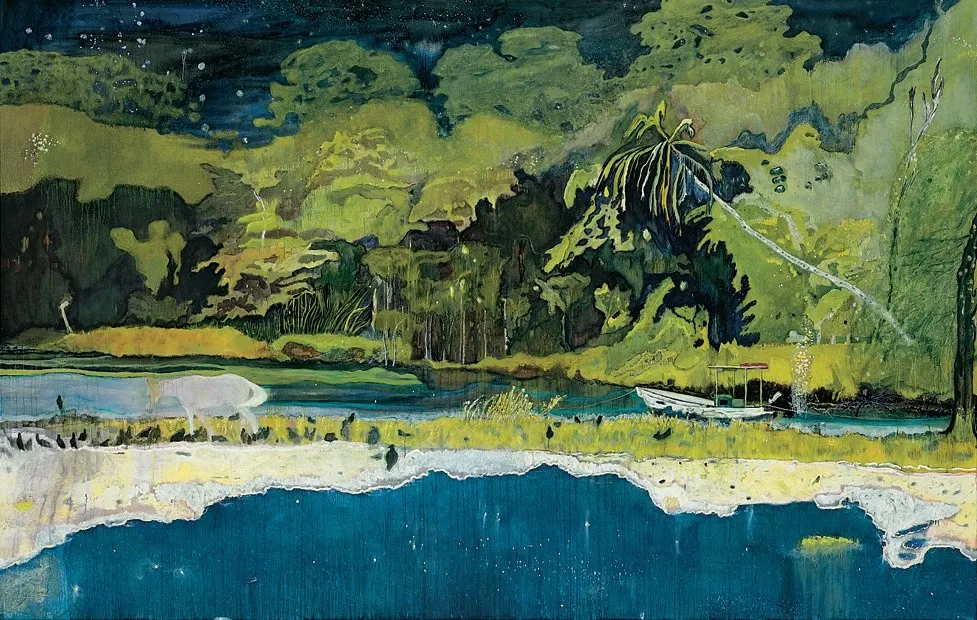
From an animistic worldview, death is seen not as an ultimate ending, but rather a change of perspective.
Toward narrative reconstruction
Where modernity championed certainty in one world view (an 'objective truth') and postmodernity embraced the relativism of world views (no 'absolute truth'), metamodernism cultivates what might be called 'contextual realism'.
It acknowledges that while our stories are constructed, some serve the flourishing of life better than others. It invites us to embraces paradox: meaning is both made and discovered, truth/Truth can be both contextual and absolute, we are both separate individuals and fundamentally interconnected at a metaphysical level.
Taking a metamodern perspective opens new possibilities for conscious participation in cultural evolution. We're living through a paradigm shift comparable to the first Renaissance that birthed modernity. Many cultural pioneers consider us to be living through a Second Renaissance of sorts.
By becoming aware of the paradigm we reside within allows us to transcend it, and create from higher orders of complexity. Life fish in water, for the most part we are unaware of the beliefs and values that structure our experience. By raising our consciousness and developing construct awareness we gain the ability to recognise the water within which we swim in and consciously alter it.
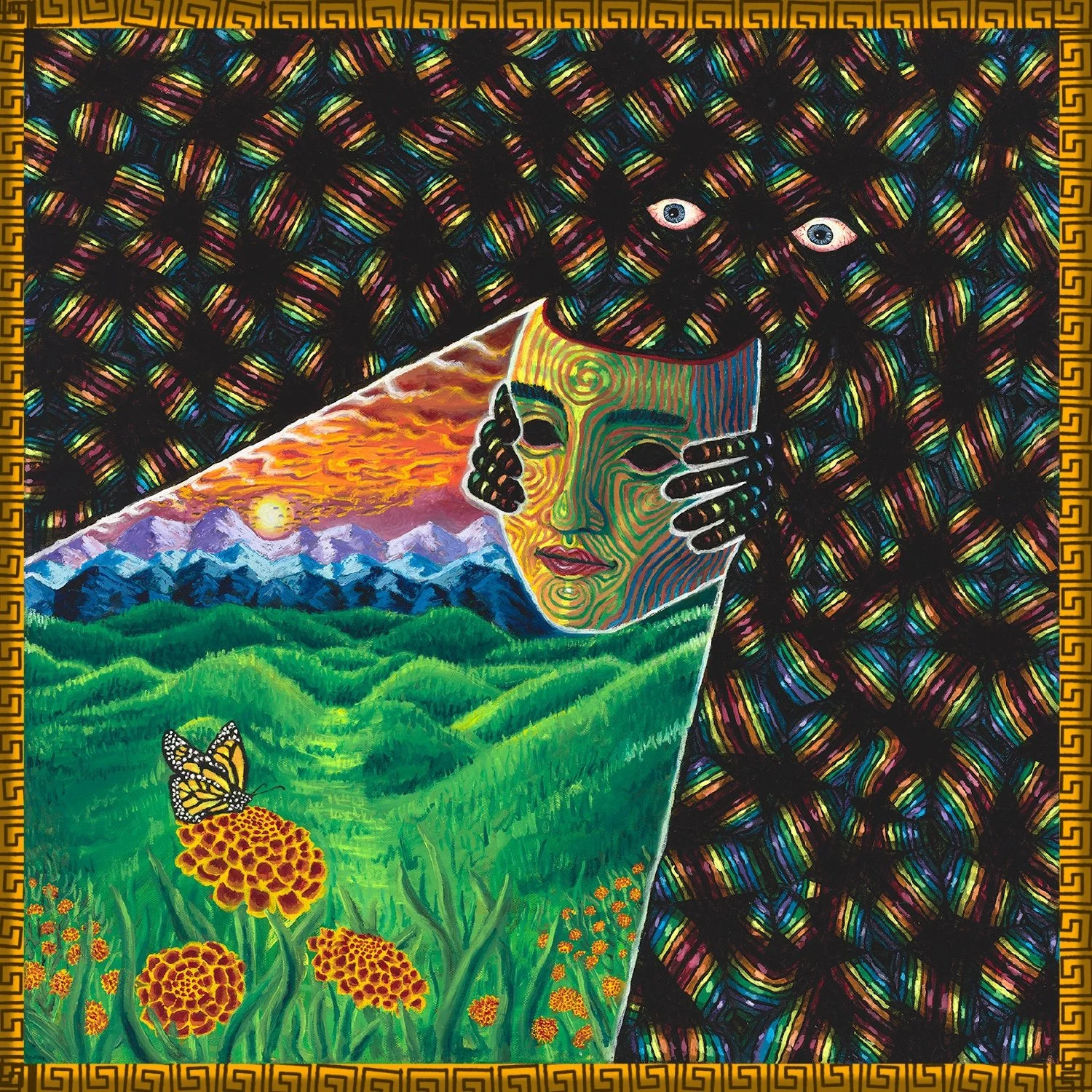
This 'both-and' thinking suggests we can preserve empirical inquiry without reducing reality to the measurable, we can honour diversity without collapsing into fragmentation, and we can rebuild coherent narratives without returning to dogmatic certainty. A metamodern perspective doesn't solve the various crises we are facing, but I believe it at least provides an intellectual scaffolding for conscious participation in what comes next.
Contemplative traditions from Buddhism, Stoicism, and other sources offer structures for meaning-making without dogmatic belief. Their power lies in transformation through embodied practice. Meditation, shadow work, sharing circles are psyche-technologies for cultivating the inner soil from which meaning grows. Indigenous ceremonies, monastic communities, craft guilds weren't merely for passing on information, but for cultivating all four ways of knowing through apprenticeship and practice.
"Tell me and I forget, show me and I remember, involve me and I understand" – Chinese proverb
Emergence of new narratives
Even as old narratives collapse and new technologies threaten further fragmentation, the pendulum of progress might well swing the other way. Paradoxically, complete saturation of artificiality could catalyse a return of the relational. As the mainstream digital world becomes obviously untrustworthy, people retreat to their respective corners of the cosy web, and to local, embodied experiences.
Young people who've never known life without social media increasingly seek digital detoxes. Many are rejecting career paths their parents climbed, recognising them as treadmills to nowhere. They're consciously choosing meaning over money, experience over accumulation, and connection over competition. Where older generations may see laziness or entitlement, these young people are disentangling themselves from the status quo, and sowing seeds for different futures.
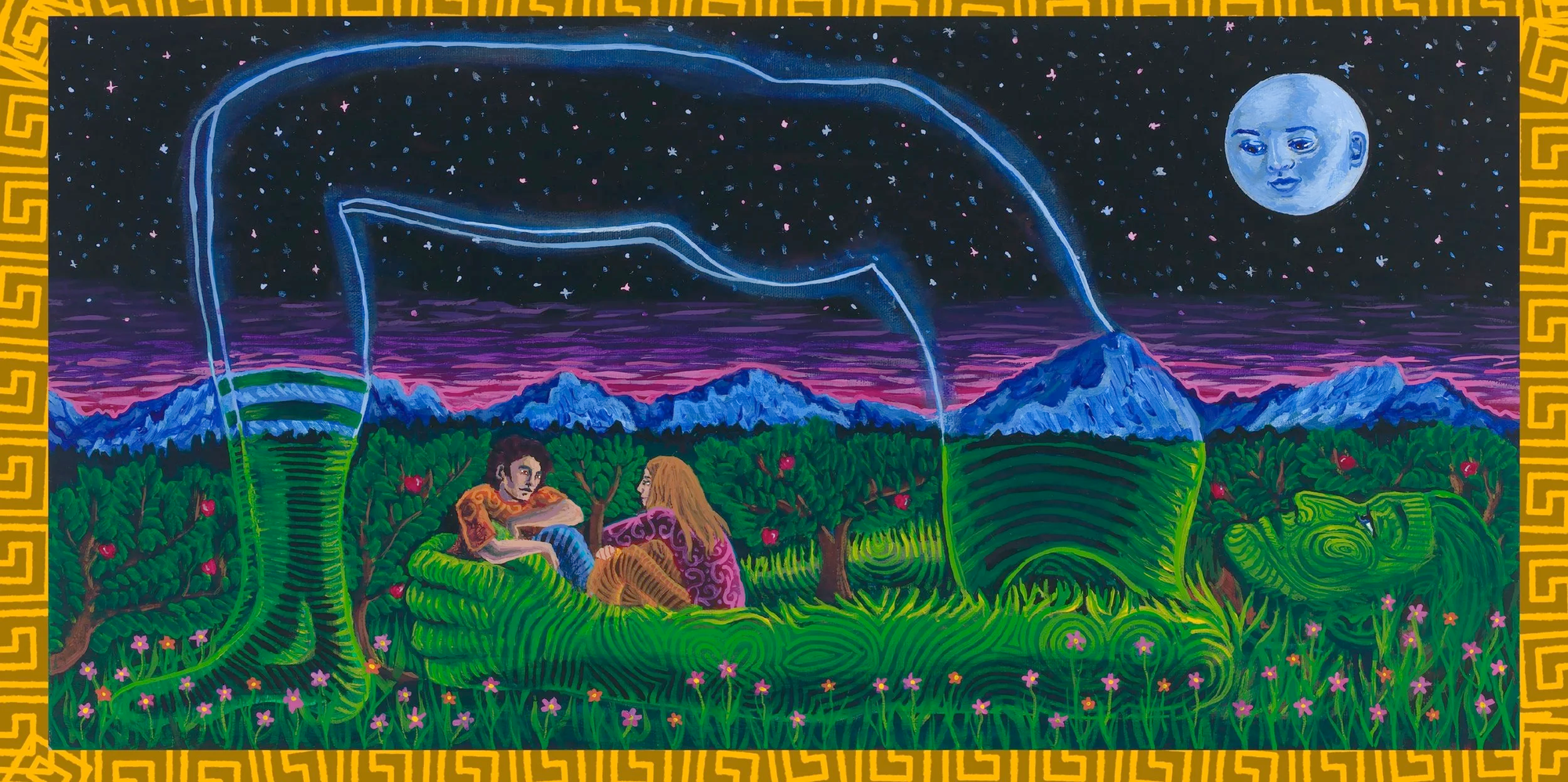
Counter-cultures prioritising primary satisfactions emerge worldwide. Community gardens reconnect people with soil and seasons. Maker spaces and creator markets restore the joy of creation. Sharing circles witness and hold loss rather than hiding it. Time banks use hours as currency. Gift economies demonstrate how generosity generates abundance. Forest schools return children to unstructured play in nature. Regenerative farms heal land while feeding people.
These movements remain small, scattered, fragile. Yet they're profoundly threatening to existing power structures because they're not fighting the system – they're making it obsolete. The old economy depends on people remaining disconnected from primary satisfactions. By building alternatives to unconscious consumerism a new economic model is gradually taking form.
Weaving what comes next
Reality is too complex, too multifaceted, too alive for any single story to contain it. What we need is an ecology of stories, diverse enough to capture the various narratives serving different purposes at different scales, while maintaining coherent relationship to each other and to the living world.
Some stories will be scientific, others metaphysical. Some local, others global. Some human-centered, others life-centered. These stories aren't united through dogma, but through a shared recognition of our embodied participation in the living world.
Whatever stories we might personally tell ourselves, we all have physiological needs that need tending to. We breathe the same air, drink the same water, depend on the same soil, and live under the same sun. These physical realities provide an undeniable foundation for stories that, while diverse, remain grounded in ecological reality.

Despite losing touch with our roots through our rampant desire for 'progress', we are once again being reminded of our interconnectedness with nature. Many who have been set on a path of socially defined success are questioning their motives and reconstructing their own narratives. A metamodern perspective is emerging which invites us to embrace paradox and relate to life at higher orders of complexity.
I believe we are becoming increasingly aware that if as a species we continue pursuing secondary satisfiers (consumption, status, distraction) then we will continue to watch our civilisation hollow out from within. There are countless voices across all generations who are inspiring others through their words and actions to design a life around primary satisfiers. Lives of connection, creativity, service, and community. Linda Grandville's life stands as quiet testimony to such a way of being.
Sometimes when faced with the sheer complexity of the world and life itself, we may feel the urge to shrink and question our place within it all. It is during these moments that you must remember that there is an invisible tapestry that weaves creation together. Forces greater than our individual selves form the foundation of our conscious experience.
Your life is a single golden thread within an infinite tapestry. The thought you think, the words you speak, the actions you take ripple outward in ways you may never fully see nor understand. You are not merely an external bystander to the unfolding of life. You are a conscious participant, and your choices matter, no matter how big or small you might deem them to be.
This was the fifth and final essay in a series on systemic sensemaking. If these explorations resonated, consider what practices might help you embody the insights. For reference, here are the links to the previous essays in this series: Part 1; Part 2; Part 3; Part 4.