Scarcity in an abundant world

This is the fourth essay in a series of five on the topic of systemic sensemaking. Concepts are developed sequentially throughout, and as such, I recommend reading the essays in order. Navigate to: Part 1; Part 2; Part 3.
There exists a peculiar dissonance in our modern condition. We inhabit the most materially prosperous moment in human history, where more people have access to food, shelter, and information than ever before. Yet we are haunted by a persistent sense of insufficiency. This feeling permeates our societies like a background frequency, barely audible yet constantly shaping our choices, our politics, and our relationship with the living world.
What constitutes "enough"? This question, seemingly simple, reveals itself as one of the most profound challenges of our time. It sits at the intersection of psychology and ecology, of individual desire and collective survival. The age old philosophical inquiry into what constitutes "the good life" has become an ecological imperative, as our failure to answer it coherently now could have catastrophic collective consequences for generations to come.
Inherently present within indigenous wisdom is the knowledge that our survival depends upon on the natural world, and therefore it is deserving of our respect and reverence. Yet, tragically, somewhere in our journey toward modernity, we inverted this relationship. Consumption became the metric of success, growth the only acceptable trajectory, and "enough" transformed from a state of satisfaction into a moving target that recedes as we approach it.
Consumption by design
The systems we've constructed over recent decades reveal our collective answer to what constitutes enough: always more. This isn't merely greed or moral failure, it's the logical outcome of structures designed to generate perpetual want. We've built a system upon a dynamic wherein success begets success, to the point where the winner takes all. Much like the board game Monopoly, those who play the game uninhibited by moral reservations gain more power, and are able to shape the playing field in their favour.

Food systems exemplify this paradox with stark clarity. We produce enough calories to feed 10 billion people, yet hunger persists while a third of food is wasted. The issue isn't scarcity of production but the architecture of distribution and value. Industrial agriculture optimises for yield and profit rather than nourishment and resilience. We've created abundance in quantity while impoverishing quality: soils depleted, crop diversity collapsed, and nutritional density declining even as volumes soar.
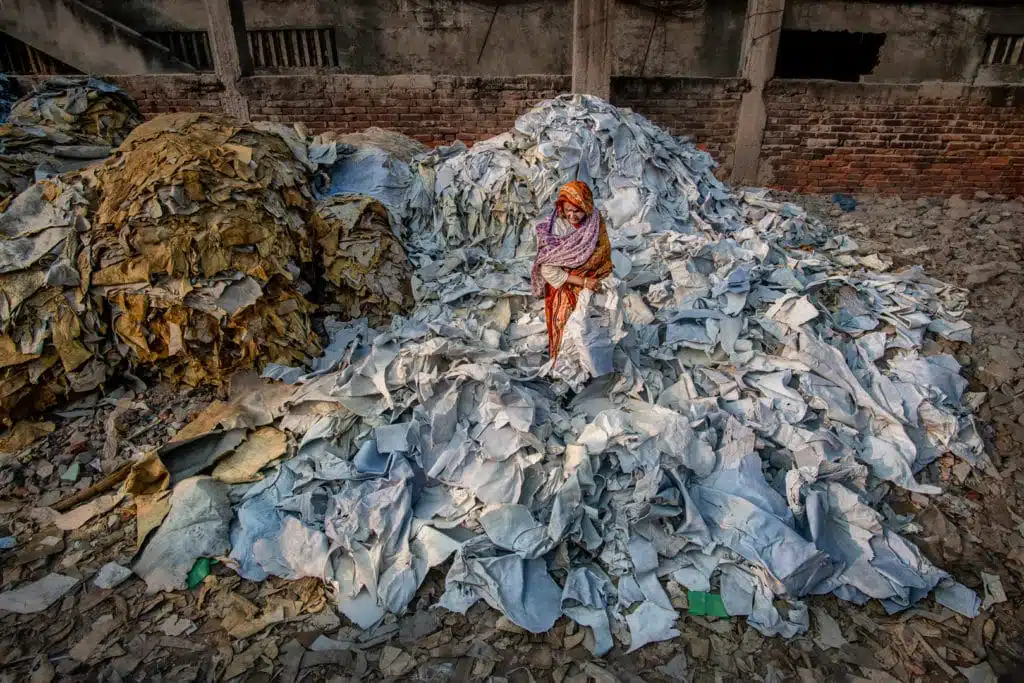
This same pattern repeats across domains. Fast fashion produces over 100 billion garments annually (fourteen items for every person on Earth!) while textile waste mountains grow and garment workers labour in conditions that mock our material prosperity. We've achieved the remarkable feat of creating scarcity from abundance: scarcity of meaning, of durability, of genuine satisfaction.
Despite not being constrained by biophysical limitations, we've also managed to manufacture insufficiency in the digital realm. Social media platforms engineer addiction through intermittent variable rewards, the same psychological mechanism that powers slot machines. The attention economy treats human consciousness as a resource to be mined, creating what researcher Michael Goldhaber presciently termed "attention scarcity" amid information abundance.
These aren't market failures but market successes. Industries have become exceptionally skilled at hijacking our neurological reward systems, creating what researcher Nir Eyal calls "hook cycles": trigger, action, variable reward, investment. We're not consuming products so much as being consumed by them, our ancient brains overwhelmed by supernormal stimuli engineered to bypass our capacity for satisfaction.
The hedonic treadmill accelerates
We have a tendency to return to baseline happiness despite positive or negative life changes, which has been coined the hedonic treadmill. This concept has been transformed from a psychological phenomenon into an economic strategy. Industries don't merely adapt to this tendency; they actively cultivate and exploit it. The brief dopamine spike of a purchase, a like, a notification, must be constantly renewed, requiring ever-escalating stimulation to achieve the same effect.
This creates a peculiar form of poverty amid plenty. Psychologist Tim Kasser's research reveals that people oriented toward materialistic values report lower well-being, more anxiety, and weaker social connections. We're not just failing to find satisfaction through consumption; consumption is actively undermining our capacity for satisfaction. The means have devoured the ends.
Consider how this plays out in our relationship with beauty and wonder: a sunset, a child's laughter, the elegant mathematics of a seashell. These experiences require presence, not products. Yet our systems increasingly mediate, commodify, and package even these fundamental human experiences. We photograph sunsets instead of watching them, curate our children's childhoods for social media, and buy expensive equipment to "properly" experience nature.

The simple pleasures that have sustained humans across millennia are being repackaged as lifestyle products, accessible primarily through consumption.
In an economy predicated on growth, industries that successfully cultivate insatiability outcompete those that satisfy. A company that sold you one perfect, durable product would be selected against by one that sold you planned obsolescence. Our economic selection pressures favour the manufacture of discontent.
Crossing planetary boundaries
While we've been caught in these cycles of artificial scarcity, we've been steadily creating conditions of genuine scarcity. The Earth system scientists Johan Rockström and Will Steffen identified nine planetary boundaries within which humanity can operate safely. We have now crossed seven of them. This isn't distant future risk, it's a present reality we must face and come to terms with.
Biosphere integrity has been shattered. We're experiencing extinction rates 1,000 to 10,000 times the natural background rate. Biogeochemical flows of nitrogen and phosphorus have been pushed so far beyond safe boundaries that we're fundamentally altering how life cycles through the planet. Novel entities such as plastics, chemicals, and nuclear waste accumulate faster than Earth systems can process them. Ocean acidification has recently joined the list of breached boundaries, the seas' chemistry shifting at rates not seen in millions of years.
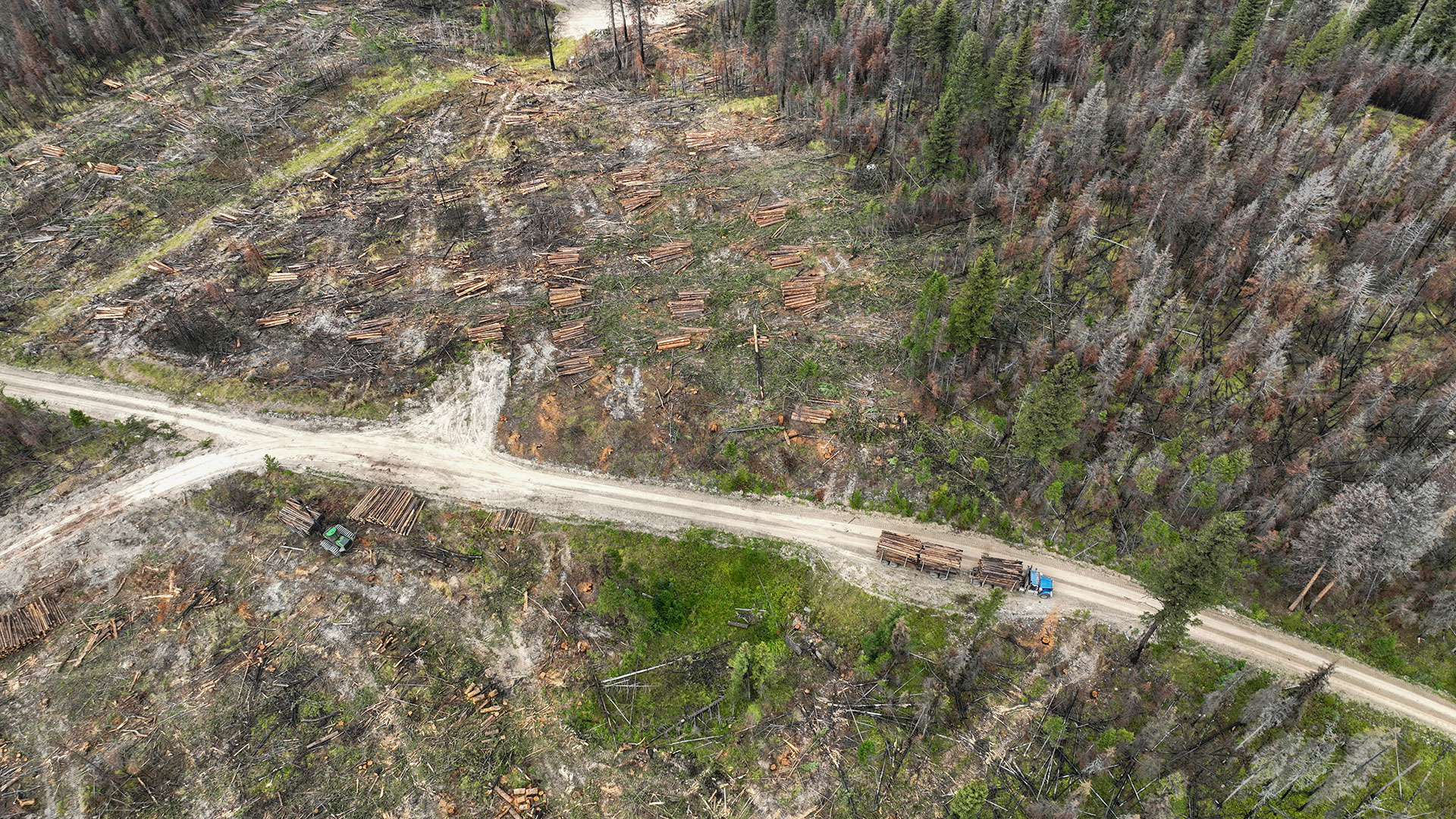
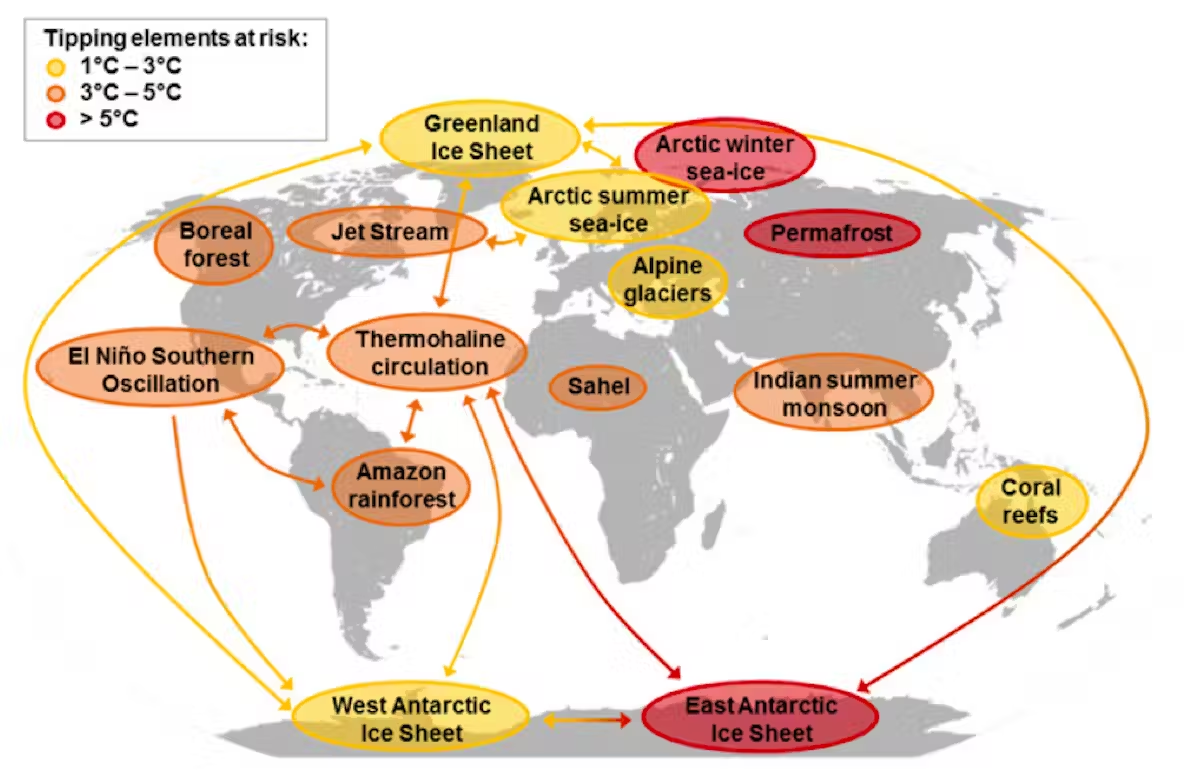
These aren't separate crises but cascading system failures, each breach making others more likely. Forest loss accelerates climate change, which intensifies droughts, which drives more forest loss. Depleted agricultural systems require more chemical fertilisers, which disrupt soil ecosystems, which require yet more fertilisers. We're creating what resilience researchers call "synchronous failures", where multiple systems fail simultaneously in ways that amplify one another.
Tragically, the masses remain blind to the predicament we are in, and national leaders continue to worship GDP growth while Earth's balance sheet deteriorates.
The bitter irony is that our pursuit of abundance through consumption is creating the conditions for actual scarcity. Climate change threatens food systems. Soil degradation undermines future productivity. Ecosystem collapse removes the services that nature provides us for free: pollination, water filtration, climate regulation. It is in the restoration and preservation of the natural world that underpin any possible future prosperity. We're so busy manufacturing wants that we're destroying our capacity to meet needs.
The wisdom of limits
Coming to terms with the mess we are in is not easy, but our collective futures depends upon it. If our extractive systems are human-made, they can be human-unmade and remade. The question isn't whether we'll develop a new relationship with enough... Planetary boundaries ensure we will. The question is whether we'll do so by choice or by catastrophe, with wisdom or through suffering.
There are glimpses of what new ways of governance might look like. Elinor Ostrom, a Nobel Prize-winning political economist, fundamentally challenged the traditional tragedy of the commons theory, which posits that shared resources would inevitably be overexploited and depleted due to human selfishness and short-sightedness. Through extensive research on natural resource commons worldwide Ostrom documented countless cases where communities successfully governed shared resources through collective action and self-regulation without state control or privatisation.
Costa Rica reversed deforestation while improving quality of life, demonstrating that ecological regeneration and human flourishing can align. Bhutan measures Gross National Happiness alongside GDP, institutionalising the recognition that well-being transcends consumption. The city of Amsterdam has adopted Doughnut Economics, aiming to meet all citizens' needs within planetary boundaries. These aren't perfect solutions but their existence demonstrates that other ways of organising societies are possible.
Individual practices point toward different relationships with sufficiency. The voluntary simplicity movement isn't about deprivation but about clarity as to what truly matters. Digital minimalism, as Cal Newport describes it, isn't anti-technology but pro-intentionality, using tools rather than being used by them. The slow food movement reconnects eating with ecology, pleasure with place. These approaches share a recognition: satisfaction comes not from having more but from needing less.
The secret to happiness isn't satisfying desires but reducing them to what genuinely contributes to flourishing.
Towards resilience and sufficiency
Imagine societies that celebrated sufficiency rather than excess, that measured success by resilience rather than growth, and that understood wealth as wellbeing rather than accumulation. We are not regressing, but in fact maturating as a species. We are finally moving beyond the capitalist fantasy of infinite expansion on a finite planet toward a new model of society.
Such societies might organise around what economist Kate Raworth calls "regenerative and distributive by design." Rather than growing first and cleaning up later, they would create circular systems where today's waste becomes tomorrow's nutrients. Rather than concentrating wealth then redistributing, they would generate broad prosperity through cooperative structures and shared ownership.
Technology in these societies would serve connection rather than extraction. Instead of algorithms designed to maximise engagement, we might have tools that respect cognitive boundaries. Instead of planned obsolescence, we might have products designed for repair, adaptation, and intergenerational use. Instead of medicating or isolating people with mental disabilities, we might instead establish hubs that bring them together and give them a purpose through meaningful work.
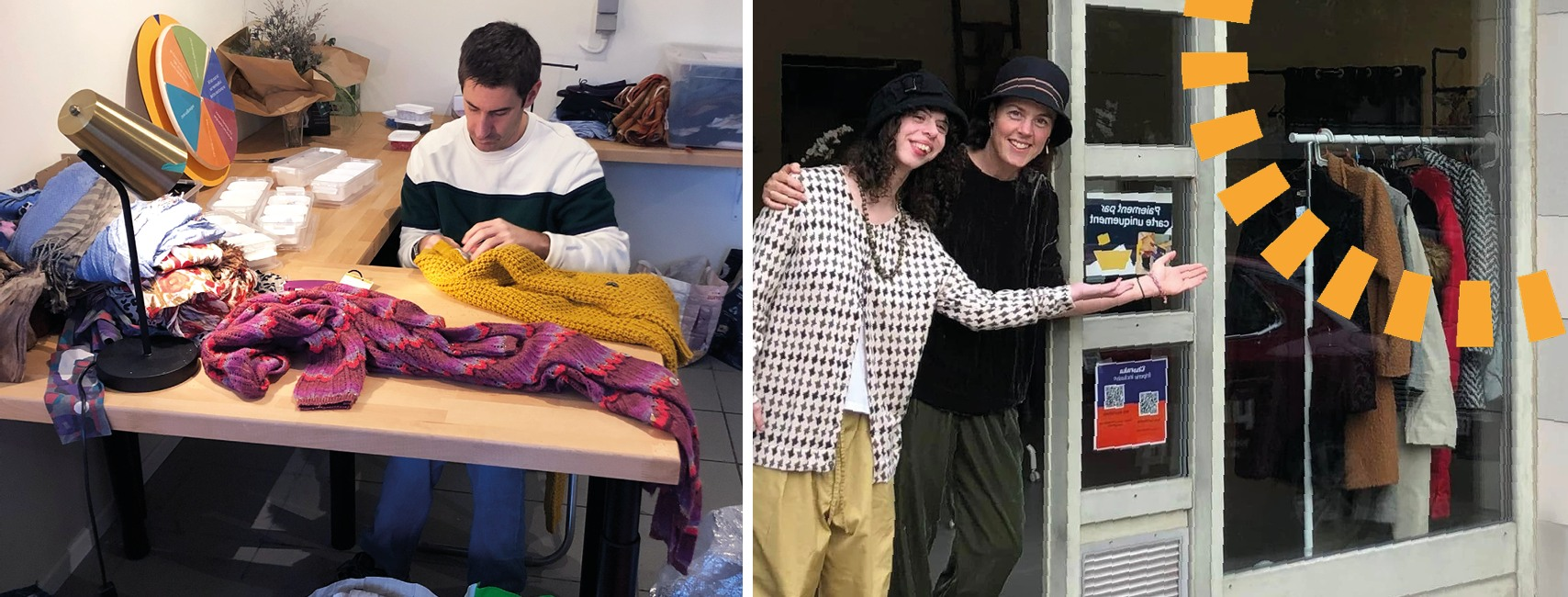
Work would shift from producing more to maintaining and regenerating. Instead of jobs creating products, we might have livelihoods tending systems: ecosystem restoration, community resilience, cultural preservation. The economist John Maynard Keynes predicted we'd be working fifteen-hour weeks by now; instead, we work longer hours to afford things previous generations didn't know they needed. Imagine redirecting that effort toward repair rather than replacement, cultivation rather than consumption.
The great simplification
At the deepest level, this transformation requires recovering a sense of the sacred. Not necessarily religious, but recognising that some things are beyond price. When everything is commodified, nothing is sacred. When nothing is sacred, everything is consumable. The path beyond consumerism isn't just economic or political but spiritual. It's in rediscovering sources of meaning that transcend market dynamics.
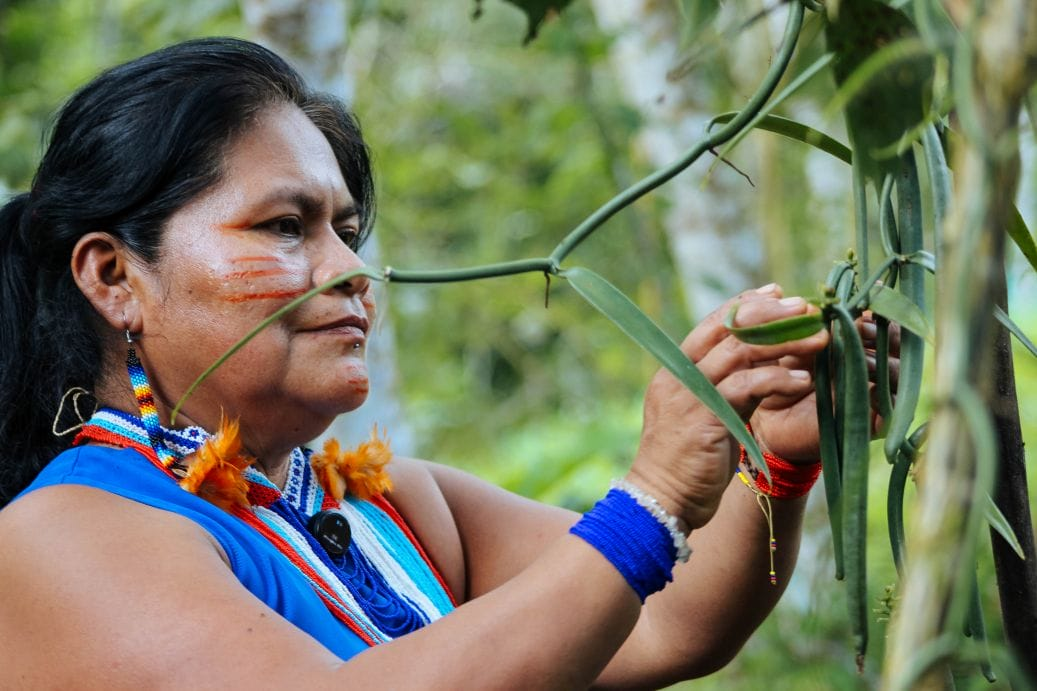
Indigenous wisdom keeper Robin Wall Kimmerer writes about the grammar of animacy — linguistic structures that recognise the aliveness of the world. In Potawatomi, the word for "bay" is the same as for "to be a bay". In other words, existence as verb rather than noun, being rather than having. Such a world view is what we are gradually returning to as Western science rediscovers what we've intuitively known all along.
We are not separate from nature but expressions of it.
Such a shift in perception fundamentally changes everything. If a forest is timber, you clearcut it. If a forest is a living community of which you're part, you tend it. If water is a commodity, you sell it. If water is sacred, you protect it. If humans are consumers, you market to them. If humans are creative participants in life's flowering, you nurture their gifts.
Monk and economist E.F. Schumacher distinguished between convergent and divergent problems. Convergent problems have single, optimal solutions: how to build a bridge, cure a disease, bake a cake. Divergent problems involve living systems and have no final answers: how to educate a child, how to organise society, how to live well. Our mistake has been treating divergent problems as convergent ones, seeking technical fixes for what are fundamentally questions of values and relationships.
The choice before us
We stand at a bifurcation point where small changes can determine which of divergent futures emerges. Continue current patterns, and we face a "Hothouse Earth" scenario where cascading feedback loops push the planet into an inhospitable stable state. However, there are numerous groups working tirelessly to move us away from this path. And perhaps through their work and yours, we just might be able to create a prosperous world without the reliance on incessant growth.
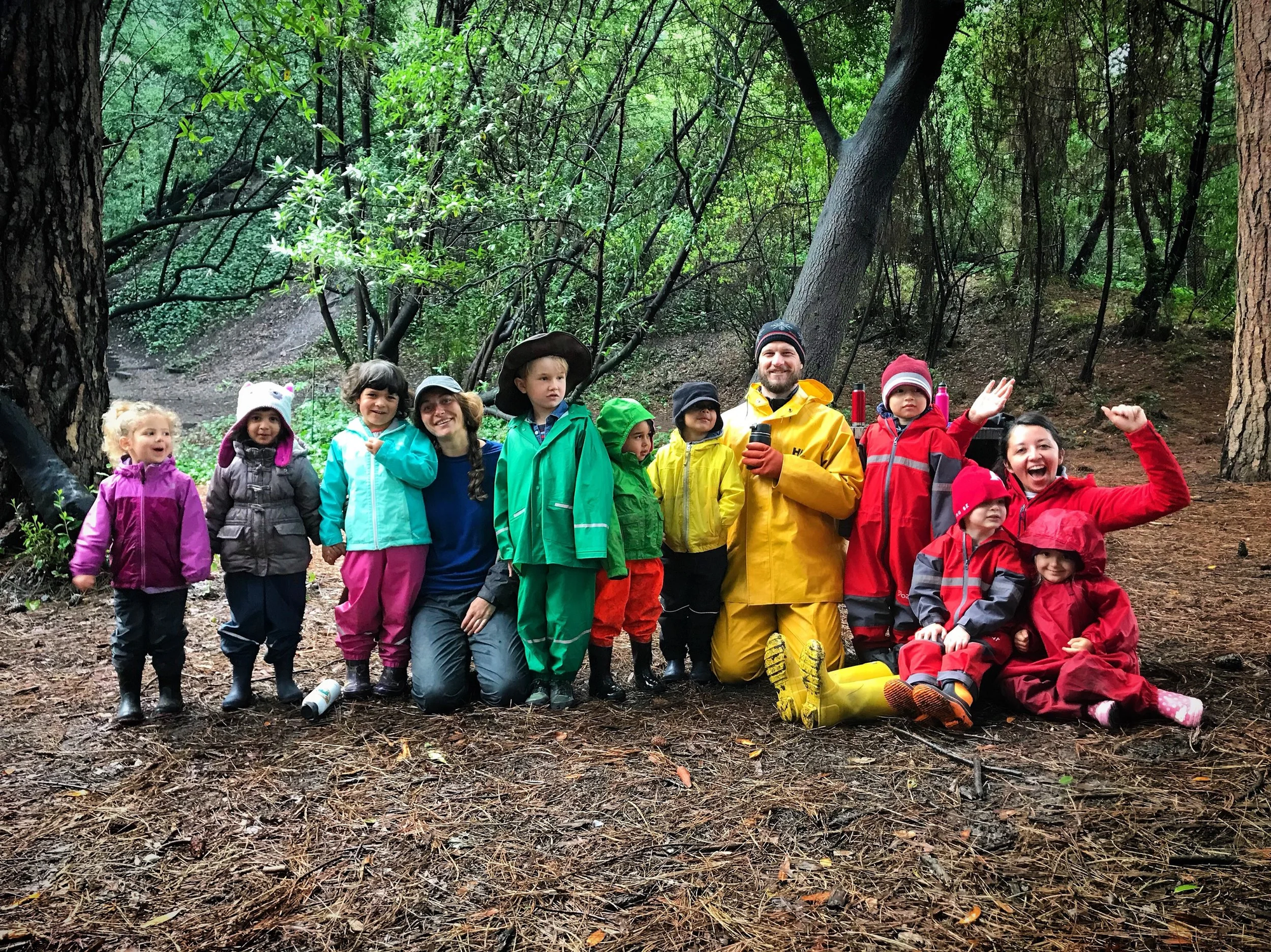
This choice plays out in countless daily decisions. Every purchase is a vote for the world we want. Every moment of presence instead of consumption is a small rebellion against manufactured distraction. Every repair instead of replacement is an act of resistance. Every garden planted, every skill shared, every community connection strengthened is a thread in the weaving of alternative futures.
The transformation required is monumental; nothing less than what cultural historian Thomas Berry called "the Great Work" of our time:
Transitioning from a period of human devastation of Earth to a period of mutually beneficial human-Earth relationships.
This isn't work for heroes but for everyone. Not a single person saving the world, but millions of people choosing to break free of the societal mould and choose to live in greater harmony with the natural order.
The paradox of our moment is that we must simultaneously grieve what we're losing and build what's emerging; we must resist current systems while creating alternatives; and we must acknowledge the magnitude of our predicament while maintaining agency and hope.
As the previous essays in this series have explored, we are creatures shaped by the systems we inhabit. Yet we're also agents capable of weaving new patterns within these systems. The same ingenuity that created consumer culture can create cultures of sufficiency. The same social coordination that built global supply chains can build resilient communities. The same human yearning that drives consumption can, redirected, drive regeneration.
The stories of our time
We are, in a very real sense, between stories. The old narratives that organised meaning — religious narratives, national identities, economic incentives — have fractured without being replaced by new ones. We scroll through fragments of incompatible worldviews, each proclaiming a relative truth, none providing the coherence we desperately seek. This narrative fragmentation has been creating existential vertigo, leaving many of us unable to locate ourselves within a meaningful whole.
How did our collective sensemaking become so fractured? How do we navigate when the maps no longer match the territory, when different groups inhabit entirely different versions of reality?
And most urgently: how do we weave new narratives that can hold both the magnitude of our predicament and the agency for transformation?
These questions about narrative aren't separate from our exploration of systems. Stories aren't just how we describe reality; they're how we create it. The narrative of scarcity produces hoarding. The narrative of "abundance as consumption" produces depletion. The narratives we choose now, in this liminal moment between worlds, will shape which futures become possible.
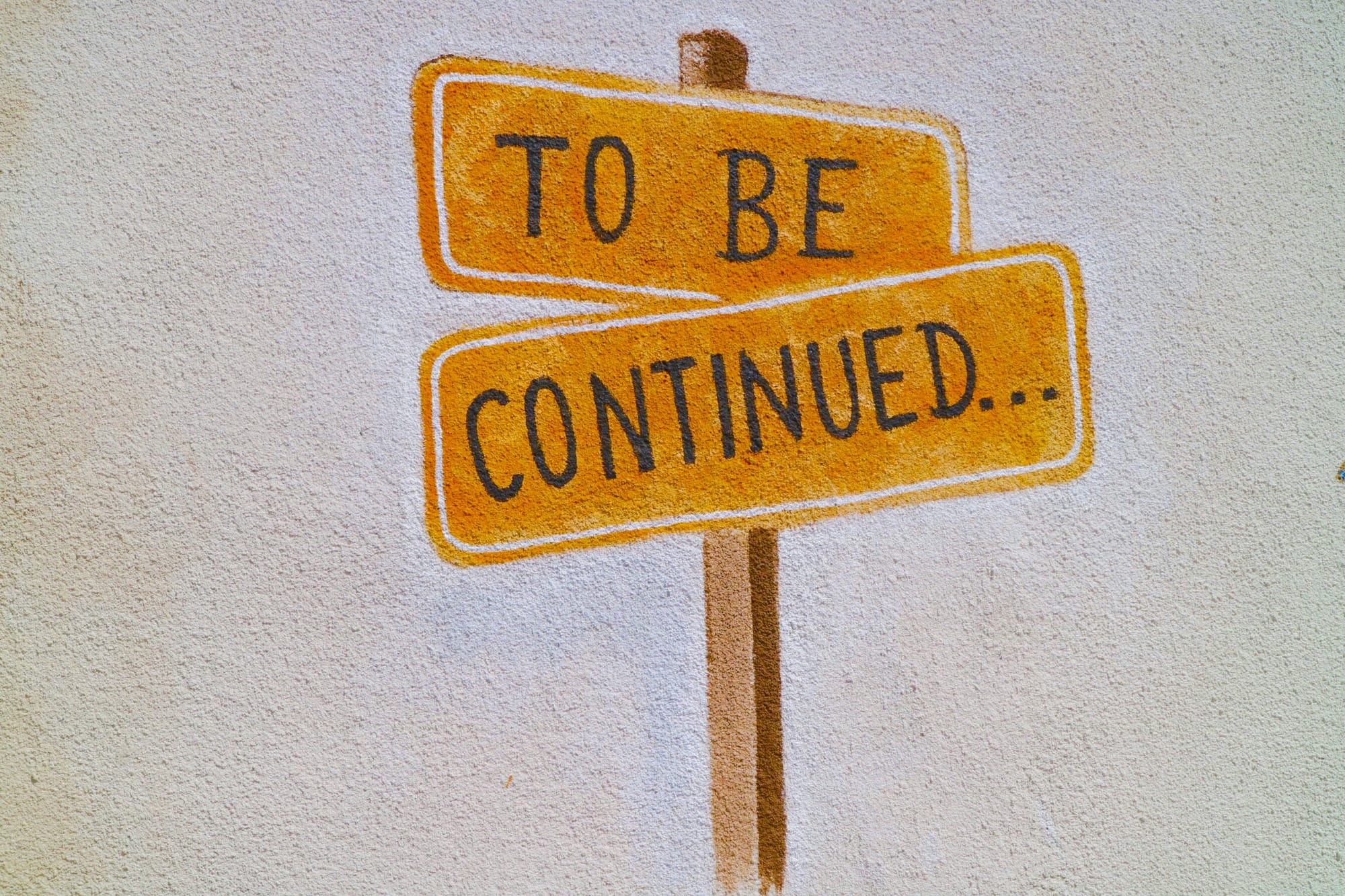
The final essay in this series will explore this terrain of fractured and emerging narratives. We'll examine how the splintering of shared stories both reflects and accelerates systemic breakdown, how competing narratives become incompatible realities, and how we might begin to weave new stories that honour complexity while providing coherence.
If understanding systems reveals the patterns shaping our world, understanding narratives reveals how we might reshape them.
The work of reconstructing narratives isn't about finding the one true story but about creating solidarity through imagination. Weave stories capacious enough to hold multiple truths, resilient enough to adapt to changing conditions, and compelling enough to coordinate collective action. This is perhaps the most essential systems work of our time: midwifing the stories that can carry us through this period of collective upheaval and transformation.
This was the fourth essay in a five-part series on the topic of systemic sensemaking. The next essay, "Reconstructing fractured narratives" looks at how we might begin to weave together and reconstruct a shared narrative — one that is in harmony with the flourishing of all life on Earth.